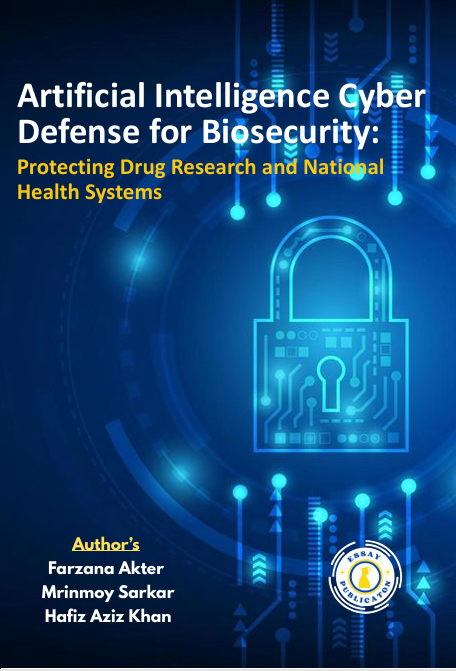
Artificial Intelligence Cyber Defense for Biosecurity: Protecting Drug Research and National Health Systems
Abstract
The rapid convergence of biotechnology, cyber infrastructure, and artificial intelligence has
transformed the landscape of global health security. As nations accelerate drug discovery,
genomic surveillance, and digital health modernization, the vulnerabilities within these
interconnected systems have grown equally complex. Artificial Intelligence Cyber Defense
for Biosecurity: Protecting Drug Research and National Health Systems examines this
emerging frontier, where AI-driven tools are becoming essential for safeguarding critical
biomedical assets.
From protecting the intellectual property of life-saving therapeutics to securing laboratory
networks, supply chains, and national disease surveillance platforms, AI-enabled defense
mechanisms now play a pivotal role in preventing cyberattacks, data theft, and research
manipulation. This book explores how machine learning, threat intelligence automation,
anomaly detection, and secure AI governance can collectively reinforce the resilience of
biosecurity ecosystems.
The goal is to provide researchers, policymakers, and health-system leaders with a clear
understanding of the strategic importance of AI in defending the biological sciences. As
digital and biological domains continue to converge, the need for advanced, ethically
aligned, and trustworthy AI defense systems becomes not only a technological priority but a
national and global imperative. This work aims to illuminate that path and inspire
stronger, smarter, and safer futures in biosecurity.
References
1. Dalal, R. S., Howard, D. J., Bennett, R. J., Posey, C., Zaccaro, S. J., & Brummel, B. J. (2022). Organizational science and cybersecurity: Abundant opportunities for research at the interface. Journal of Business Psychology, 37(1), 1–29. https://doi.org/10.1007/s10869-021-09732-9
2. Ifinedo, P. (2022). Effects of security knowledge, self-control, and countermeasures on cybersecurity behaviors. Journal of Computer Information Systems, 63(2), 380–396. https://doi.org/10.1080/08874417.2022.2065553
3. Tursunbayeva, A., et al. (2022). AI in human resource management and cybersecurity implications. International Journal of Information Management, 65, 102518.
4. Gkorezis, P., & Bellou, V. (2022). AI adoption and employee cybersecurity behavior. Journal of Business Research, 145, 874–885.
5. Marler, J. H., & Boudreau, J. W. (2022). An evidence-based review of AI and HRM security risks. Human Resource Management Review, 32(4), 100898.
6. Huang, M. H., & Rust, R. T. (2023). AI transformation of service work and employee behavior. Journal of Service Research, 26(2), 125–140.
7. Gajula, S. (2025). Cybersecurity Risk Prediction Using Graph Neural Networks. Authorea Preprints.
8. Malik, A., Budhwar, P., & Srikanth, N. (2023). Artificial intelligence and cybersecurity in human resource management. Human Resource Management Review, 33(1), 100910.
9. Dwivedi, Y. K., et al. (2023). Artificial intelligence: Multidisciplinary perspectives on cybersecurity and organizational impacts. International Journal of Information Management, 69, 102553.
10. Stahl, B. C. (2023). Ethical implications of AI-driven cybersecurity in organizations. Journal of Business Ethics, 182(3), 721–735.
11. Lee, J., & Shin, S. (2024). AI-driven decision-making and organizational structure in cybersecurity. Decision Support Systems, 172, 113982.
12. Verganti, R., Vendraminelli, L., & Iansiti, M. (2023). AI platforms and organizational redesign in security systems. Organization Science, 34(5), 1821–1840.